

Ingredient Library
Watermelon Seed Oil
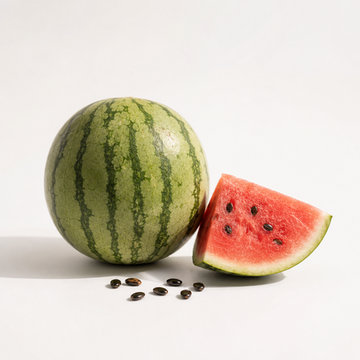
Watermelon seed oil is a light, fast-absorbing oil unusually high in linoleic acid, the fatty acid oily and combination skin is often low on. It hydrates and balances without a greasy film, and it is non-comedogenic.
A natural history
Watermelon is one of the oldest cultivated fruits, and long before it was a summer treat, its small seeds were quietly prized for more than the flesh. Across generations, people pressed the seeds into a light, nourishing oil and used it to soften and protect skin against harsh, dry weather, a beauty ritual that predates modern skincare by centuries. What those traditions valued by feel, a light oil that comforts skin without weighing it down, we can now explain by what the oil is made of.
What watermelon seed oil does for your skin
Watermelon seed oil is unusually high in linoleic acid, the omega-6 fatty acid that makes up the majority of its fats, alongside antioxidant vitamin E.[1] That matters because oily and breakout-prone skin is often low in linoleic acid, so a linoleic-rich oil tends to balance rather than burden it. The oil is light and fast-absorbing, hydrates without a greasy film, and is considered non-comedogenic, which is why it suits oily, combination, and dehydrated skin that heavier oils can overwhelm.
Watermelon seed oil vs. heavier oils
The difference comes down to fatty acids. Richer oils are high in oleic acid and feel cushioning, which drier or mature skin loves. Watermelon seed oil is the opposite: linoleic-rich, light, and quick to absorb, a better match for oily and combination skin that wants hydration without heaviness or shine.
Who it suits best
If your skin runs oily, combination, or looks dehydrated by afternoon, this is the oil to reach for. It layers cleanly under makeup, plays well with water-based serums, and gives lasting-feeling hydration without shine. Very dry or mature skin can still enjoy it, often with a richer balm layered on top.
References
[1] Watermelon seed compounds shown to support skin-barrier lipids and benefit dry skin in a human sebocyte study. PubMed Central, PMC12388719. ncbi.nlm.nih.gov
Found in these formulas
Questions, answered
Yes. It is a light, fast-absorbing oil rich in linoleic acid and antioxidants, valued for hydrating and balancing skin without heaviness. It suits most skin, including oily and combination.
It is considered non-comedogenic and is high in linoleic acid, the fatty acid oily and breakout-prone skin is often short on, so it tends to balance rather than clog.
Lightweight hydration, balancing oily or combination skin, softening the look of fine lines, and antioxidant support, all without a greasy film.
They are the same thing. Watermelon oil is simply the everyday name for the oil cold-pressed from watermelon seeds.