

Ingredient Library
Vitamin C
L-ascorbic acid
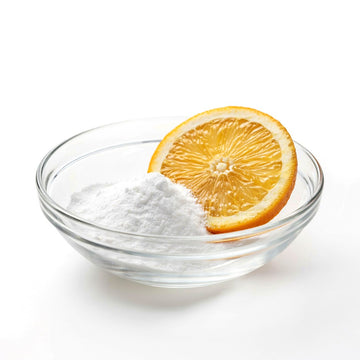
Vitamin C is a powerhouse antioxidant that brightens, evens tone, and defends against daily environmental stress. It suits dull, uneven, and aging skin.
A natural history
Vitamin C's story begins with one of history's great medical mysteries: scurvy, the disease that once devastated sailors on long voyages cut off from fresh food. The cure turned out to be something in citrus and fresh produce, a missing factor finally identified as vitamin C, or ascorbic acid, by the Hungarian biochemist Albert Szent-Gyorgyi, who won the 1937 Nobel Prize for the work. What began as a sailor's remedy is now one of the most studied ingredients in all of skincare.
Vitamin C is found throughout nature, concentrated in citrus, berries, peppers, and leafy greens, and it is woven into the body's own chemistry, where it helps build collagen and fights free radicals. One memorable quirk explains why skincare cares so much: humans are among the few animals that cannot manufacture their own vitamin C, so skin depends entirely on what we eat and what we apply.
What it does for your skin
On skin, vitamin C works on two fronts. As an antioxidant it helps neutralize the free radicals stirred up by sun and pollution, and as a partner to collagen it supports firmer, more resilient-looking skin; a 2017 review in Nutrients describes both roles, noting that healthy skin naturally holds high levels of vitamin C.[1] For tone, a small split-face trial found that topical vitamin C gently improved the look of uneven pigmentation and was very well tolerated, a gentle path to a brighter, more even complexion.[2]
References
[1] Pullar JM, Carr AC, Vissers MCM. The roles of vitamin C in skin health. Nutrients. 2017;9(8):866. doi.org/10.3390/nu9080866
[2] Espinal-Perez LE, Moncada B, Castanedo-Cazares JP. A double-blind randomized trial of 5% ascorbic acid vs. 4% hydroquinone in melasma. Int J Dermatol. 2004;43(8):604-607. doi.org/10.1111/j.1365-4632.2004.02134.x
Found in these formulas
Questions, answered
As an antioxidant it helps defend against the look of environmental stress, and it supports collagen for firmer, brighter-looking skin.
It can. It is valued for gently supporting a brighter, more even-looking complexion, and it is well tolerated.
Skin holds a lot of vitamin C but cannot make its own, so a topical supply helps keep it stocked.
Our 10% Vitamin C Kakadu Plum Serum, Vitamin C Serum Balm, and Vitamin C Glow Boost Mud Mask, among others.