

Ingredient Library
Niacinamide
Vitamin B3 (nicotinamide)
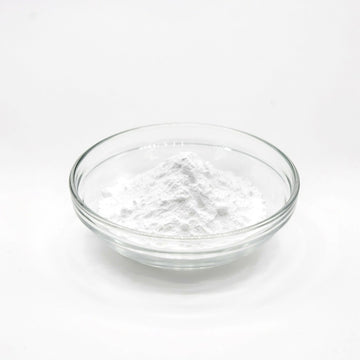
Niacinamide, or vitamin B3, strengthens the skin barrier, refines the look of pores, and evens tone. Gentle and versatile, it is one of the most useful actives for dry, stressed, or reactive skin.
What niacinamide does for your skin
Niacinamide earns its multitasker reputation. A landmark study found that topical niacinamide boosts the skin's own production of ceramides and barrier lipids while reducing water loss, which is why it is so associated with a stronger-looking skin barrier.[1] In a twelve-week facial study it was also linked to the look of more even tone, with fewer spots and less sallowness and blotchiness.[2] That blend of barrier support and even tone is why it shows up in so many routines.
Niacinamide for dry, stressed, and slow-aging skin
If your skin runs dry, reactive, or simply stressed, niacinamide is one of the most useful actives to reach for, because it works on the barrier itself rather than stripping it. In the twelve-week facial study above, it was linked to the look of more even tone, fewer spots, and less sallowness and blotchiness, alongside its barrier benefits.[2] That is why it fits a slow-aging routine built on comfort and consistency, at any age that needs hydration and barrier support.
How to use niacinamide
Where niacinamide sits in your routine depends on the product it is in, since it can appear in a toner, a serum, or a moisturizer. As a rule, apply your lighter, water-based steps first and richer creams or oils last. It is stable and gentle enough for morning or night, and it plays well with almost everything.
Pairs easily with:
hyaluronic acid for hydration on top of barrier support, vegetable ceramides to rebuild the barrier directly, peptides for firmness, retinol (niacinamide's barrier support can make a retinol routine feel more comfortable), and vitamin C, as below. It is generally compatible with most common skincare ingredients.
Niacinamide vs vitamin C: do you need both?
These two get compared constantly, usually as an either/or. They are not, because they do different jobs. Vitamin C is above all a daytime antioxidant that helps defend skin against everyday free radicals while it brightens; niacinamide is a gentle, barrier-supporting multitasker that works on tone, the look of pores, and the look of redness. Where they overlap is a more even, brighter-looking complexion, reached by different routes.
| Niacinamide | Vitamin C | |
|---|---|---|
| Main role | Barrier support, even tone, refined-looking pores | Antioxidant defense and brightening |
| Tolerance | Often well tolerated, even by sensitive skin | Can cause sensitivity in reactive skin |
| When to use | Morning or night | Usually morning, for daytime defense |
| Easiest starting point | Yes, especially for dry or reactive skin | Great once your skin is comfortable with actives |
And the old rule that you cannot use them together? Largely a myth, drawn from decades-old lab conditions that do not reflect how modern products are formulated. In practice they layer well: many people use vitamin C in the morning for antioxidant defense and niacinamide any time for barrier support and even tone. If you would rather keep things simple, niacinamide is the more forgiving one to start with.
Why we anchored our Vitamin B Serum in niacinamide
Skin today is so often two things at once: over-stressed and dry. We built our Vitamin B Intensive Hydrating Serum for exactly that skin, to do two jobs in a single step, support the barrier and hydrate it deeply. Niacinamide is the anchor of that formula, chosen deliberately, because it helps skin rebuild its own ceramides, the lipids that hold moisture in and keep irritants out. We pair it with vegetable ceramides delivered directly, hyaluronic acid to draw water into the skin, and panthenol to calm, so the barrier is rebuilt from more than one direction at once.
It is gentle enough for reactive skin and made for any age that needs hydration and barrier support. Use it morning and night, before your other serums and oils, our Watermelon Seed, Blue Algae, MMC Oil, or Active Botanicals, and the whole routine tends to sit better and work better. Made in Mississippi, without synthetic fragrance.
Shop the Vitamin B SerumA natural history
Niacinamide is a form of vitamin B3, and its discovery is tied to pellagra, a once-deadly disease of poor, corn-heavy diets whose first sign was a rough, sun-sensitive rash, the symptom that gave the illness its name from old words for rough skin. After early-twentieth-century work proved pellagra was about diet rather than infection, scientists in 1937 pinned down the missing nutrient, vitamin B3. There is even a memorable footnote: when flour was first enriched with it, headlines fretted about a chemical relative of nicotine, so the friendlier name niacin was coined to calm the public.
The vitamin occurs naturally in foods like meat, fish, grains, and legumes, and the body can even make it from an amino acid. Its leap into skincare came once researchers found it did far more than prevent a deficiency, going on to become one of the most versatile and best-tolerated ingredients on a label.
References
[1] Tanno O, Ota Y, Kitamura N, Katsube T, Inoue S. Nicotinamide increases biosynthesis of ceramides as well as other stratum corneum lipids to improve the epidermal permeability barrier. Br J Dermatol. 2000;143(3):524-531. doi.org/10.1111/j.1365-2133.2000.03705.x
[2] Bissett DL, Miyamoto K, Sun P, Li J, Berge CA. Topical niacinamide reduces yellowing, wrinkling, red blotchiness, and hyperpigmented spots in aging facial skin. Int J Cosmet Sci. 2004;26(5):231-238. doi.org/10.1111/j.1467-2494.2004.00228.x
Found in these formulas
Questions, answered
It is a multitasker, valued for supporting the skin barrier, evening the look of tone, and calming the look of redness. It works with the skin rather than stripping it.
Yes. It works on the barrier itself, helping skin hold moisture and stay calm, which is why it suits dry, reactive, and stressed skin at any age. In a facial study it was also linked to more even-looking tone.
Yes. Despite an old myth that they cancel each other out, modern niacinamide and vitamin C products layer well. Many people apply vitamin C in the morning for antioxidant defense and niacinamide, morning or night, for barrier support and even tone.
Yes, and they complement each other. Niacinamide supports the skin barrier, which can make a retinol routine feel more comfortable.
Published cosmetic studies have evaluated concentrations around 2 to 5 percent. Higher is not necessarily better, especially for sensitive skin, and the full formula matters as much as the number.
Give it steady, daily use. In published facial studies, changes in tone and texture were assessed over about twelve weeks, so plan for consistency rather than overnight results.
Either. It is stable and gentle enough for both. In our Vitamin B Serum we suggest morning and night, before your other serums and oils.