

Ingredient Library
N-Acetyl-L-Glutamine
Acetyl glutamine (N-acetyl-L-glutamine)
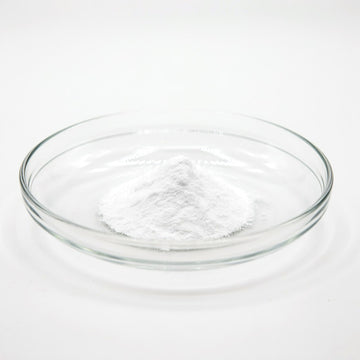
L-glutamine is an amino acid your skin naturally uses to stay soft and supple. N-acetyl-L-glutamine is the form made for skincare: it helps skin hold onto moisture, so it looks smoother and feels more cushioned.
Find it in
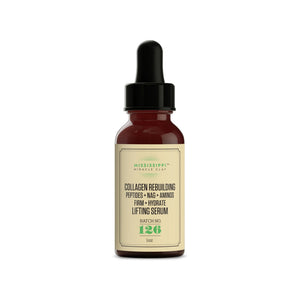
Plant peptides and N-acetyl-L-glutamine work together to support the look of skin's collagen matrix, for skin that looks firmer and smoother.
Shop nowAlso in
A natural history
This ingredient begins with one of the body's quiet workhorses. Glutamine is the single most abundant free amino acid in the human body and a favorite fuel of fast renewing cells, the very cells that build and refresh the skin. Amino acids like it are the body's building blocks, and a share of them live in the outer skin as part of its own moisture keeping system, the natural moisturizing factor.
Pure glutamine is delicate and unstable in water, awkward to keep in a formula. The answer is a gentle chemical tweak: adding an acetyl group yields a stable, skin friendly form, acetyl glutamine, that survives in a product and is easy for skin to take. It is a thoughtful way to offer the skin one of its own building blocks.
What it does for your skin
Acetyl glutamine is a stable, skin conditioning amino acid derivative. Skin science recognizes that amino acids are a core part of the natural moisturizing factor, the skin's own system for staying supple, and that this store shifts with age.[1] Glutamine itself is the body's most abundant amino acid and a key fuel for renewing cells.[2] The skin even carries its own machinery for making glutamine throughout its layers, so a serum that offers it is offering skin a molecule it already knows.[3] In a formula acetyl glutamine acts as a replenishing humectant building block that helps skin look hydrated and smooth. Dedicated studies on the ingredient itself are limited.
References
[1] Boireau-Adamezyk E, et al. The stratum corneum water content and natural moisturization factor composition evolve with age and depend on body site. Int J Dermatol. 2021;60(7):834-839. doi:10.1111/ijd.15417
[2] Kim MH, Kim H. The roles of glutamine in the intestine and its implication in intestinal diseases. Int J Mol Sci. 2017;18(5):1051. doi:10.3390/ijms18051051
[3] Danielyan L, et al. Keratinocytes as depository of ammonium-inducible glutamine synthetase: age- and anatomy-dependent distribution in human and rat skin. PLoS One. 2009;4(2):e4416. doi:10.1371/journal.pone.0004416
Questions, answered
It helps skin hold onto moisture, so it looks smoother and feels softer and more supple. It's an easy, everyday ingredient that suits dry or dull-looking skin.
It's the skincare-ready form of L-glutamine, so you get its moisture and smoothing benefits in a serum you can use every day.
Our Collagen Rebuilding Firming Serum, where it works alongside plant peptides for skin that looks firmer and smoother. You will also find it in our original 8% Polypeptide Collagen Revitalizing Toning Serum.
No. The names sound alike, but they are different ingredients. This one is the amino acid that helps skin hold onto moisture.