

Ingredient Library
Myrrh
Commiphora myrrha
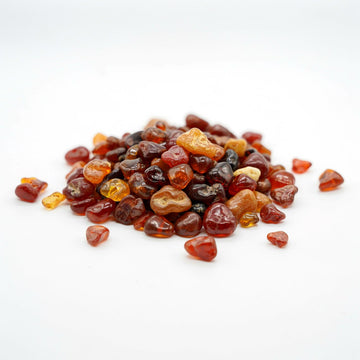
Myrrh is an ancient resin with calming, restorative properties traditionally used to comfort dry, mature skin. Grounding and soothing, it suits aging or chapped skin.
A natural history
Myrrh is the hardened resin of small, thorny Commiphora trees that grow on the parched hills of the Horn of Africa and southern Arabia. When the bark is cut, the tree weeps droplets that dry into reddish tears, and those tears have been gathered and traded for thousands of years as one of the most precious aromatics of the ancient world. The name itself comes from a Semitic root meaning bitter.
Few materials carry as much history. The ancient Egyptians burned myrrh as incense and folded it into the embalming and skin preparations of their dead, and it scented the costliest cosmetics around the Mediterranean. In the Christmas story it is one of the three gifts the Magi carry to the infant Jesus, set beside gold and frankincense, a measure of just how valuable it once was.
What it does for your skin
Myrrh resin is rich in aromatic antioxidant compounds. In laboratory testing, a myrrh resin extract showed strong free radical scavenging activity and helped drive the closure of a scratch wound in a layer of human skin cells.[1] In a separate cell study, myrrh extract encouraged the migration of dermal fibroblasts, the cells closely tied to skin renewal.[2] In a finished formula it lends a warm, resinous, antioxidant note that helps stressed or mature looking skin appear comforted and renewed. The evidence so far is laboratory based.
References
[1] Khalil RM, et al. Elucidation and valorization of the potent activity of Commiphora myrrha gum resin extract: antimicrobial and fibroblast wound healing activities. Sci Rep. 2025;15(1):31839. doi:10.1038/s41598-025-17079-x
[2] Negahdari S, et al. Wound healing activity of extracts and formulations of Aloe vera, henna, Adiantum capillus-veneris, and myrrh on mouse dermal fibroblast cells. Int J Prev Med. 2017;8:18. doi:10.4103/ijpvm.IJPVM_338_16
Found in these formulas
Questions, answered
It is an aromatic, antioxidant-rich resin that helps stressed or mature-looking skin feel comforted and look renewed.
Yes. It was traded, burned as incense, and worked into cosmetics across the ancient world, and it appears in the Christmas story as a gift of the Magi.