

Ingredient Library
Magnesium Bentonite Clay
Bentonite (montmorillonite) clay
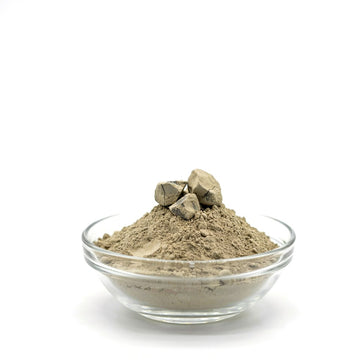
Magnesium bentonite clay is a mineral-rich volcanic clay that gently draws excess oil, dirt, and impurities from the skin while leaving behind soothing magnesium and trace minerals. It is the ingredient Mississippi Miracle Clay was founded on in 2008, and it anchors our masks, cleansers, and mineral soaps. It suits oily, congested, and combination skin, and clarifies without stripping.
Find it in
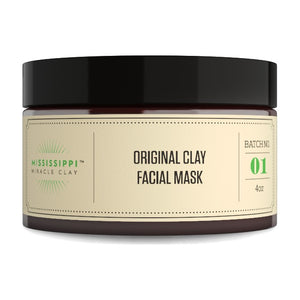
Also in
A natural history
People have reached for healing clay for almost as long as there have been people. The Roman naturalist Pliny the Elder devoted a chapter of his Natural History to the uses of different clays, Cleopatra is said to have used clay from the Nile in her cosmetic rituals, and clay poultices appear across Native American, Persian, and European folk traditions. Bentonite earned its modern name only in 1898, after the large deposits found near Fort Benton, Wyoming. The fuller story is told in the book Healing Clays: History, Science and Uses of the Earth's Best Kept Secret.[1]
What it does for your skin
Magnesium bentonite is a soft, mineral-rich clay formed from weathered volcanic ash, and its effect on skin comes from a property called cation exchange: its layered, negatively charged platelets attract and hold positively charged particles, which is how it lifts oil and impurities without harsh detergents.[2]
It also works in two ways at once. It absorbs, taking water and fluid up into the whole of its structure, and it adsorbs, letting impurities and toxins cling to the enormous surface of its charged platelets, much as metal filings leap to a magnet. A single gram of this fine clay can carry a surface area measured in acres, which is part of why so little of it can do so much.[2]
A 2024 review in Archives of Dermatological Research examined bentonite and montmorillonite clays in skincare and found they can absorb excess oil, calm inflammation, support wound healing, and help shield against UV, with early studies even showing improvements in skin hydration and elasticity.[3] That is why clay leaves congested and combination skin looking clearer and more balanced, and feeling comfortable rather than stripped.
References
[1] Boren, C. L. Healing Clays: History, Science and Uses of the Earth's Best Kept Secret. 2016.
[2] Boren, C. L. Healing Clays: History, Science and Uses of the Earth's Best Kept Secret. 2016 (Chapter 6: Bentonite Clays and How They Work, Cation Exchange).
[3] Zafar K, Lee A, Wang JY, et al. The potential cutaneous benefits of bentonites and montmorillonites. Arch Dermatol Res. 2024;316(10):702. doi.org/10.1007/s00403-024-03456-5
Questions, answered
Yes. Its naturally absorbent, mineral-rich structure binds to excess oil and impurities, which makes it a strong fit for oily, combination, and congested skin.
Magnesium bentonite is gentle and naturally derived, so most skin tolerates it well. If your skin is reactive, it is always wise to patch test a new product first.
For most skin, one to three times a week is plenty. Oily or congested skin can go a little more often, while drier or sensitive skin should use it less. Rinse before it fully hardens so it clarifies without over-drying.
Yes. It is a naturally occurring volcanic clay, used in our formulas with no synthetic fragrance or parabens.