

Ingredient Library
Kukui Nut Oil
Aleurites moluccanus
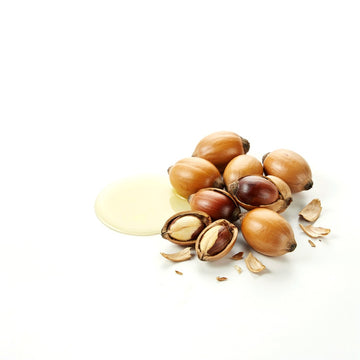
Kukui nut oil is a Hawaiian seed oil rich in fatty acids that absorb quickly to soften and soothe. Light and calming, it suits dry, sensitive, or sun-stressed skin.
A natural history
Kukui nut oil comes from the candlenut tree, the official state tree of Hawaii, carried across the Pacific more than a thousand years ago in the canoes of Polynesian voyagers. Hawaiians treasured it for light, for healing, and above all for the skin. By long tradition the oil was smoothed over skin and hair and gently massaged into babies to shield their delicate skin from sun, salt, and wind.
The nut is so rich in oil that, strung one above another and lit in turn, the kernels burned like a living candle, which is how the tree earned its English name, candlenut, and how the passing hours were once measured. From light to lei to lullaby, kukui has been woven into Hawaiian life, and the soft, fast-absorbing oil it gives is its gentlest gift.
What it does for your skin
Kukui nut oil is a light, quickly absorbed oil unusually rich in the skin loving fatty acids linoleic and alpha linolenic acid. Analysis of kukui oil confirms this high content of nourishing unsaturated fats, the basis of its soft, fast-absorbing feel.[1] Recent research also found the oil activates the skin's antioxidant defense pathway, a sign of its protective character.[2] In a formula it is a gentle, conditioning oil that helps dry, exposed skin feel soft, soothed, and comfortable.
References
[1] Ako H, et al. Fatty acid profiles of kukui nut oils over time and from different sources. Ind Crops Prod. 2005;22(2):169-174. doi:10.1016/j.indcrop.2004.07.003
[2] Kato H, et al. Kukui nut oil (Aleurites moluccanus seed oil) promotes hair growth by activating the Nrf2/ARE signaling axis. Sci Rep. 2026;16:54838. doi:10.1038/s41598-026-54838-w
Found in these formulas
Questions, answered
It is a light, fast-absorbing Hawaiian oil rich in nourishing fatty acids, traditionally used to soften and soothe dry, sun-exposed skin.
No. It is prized for sinking in quickly and leaving skin soft rather than greasy, which is why Hawaiians used it even on babies' skin.