

Ingredient Library
Carrot Seed
Daucus carota
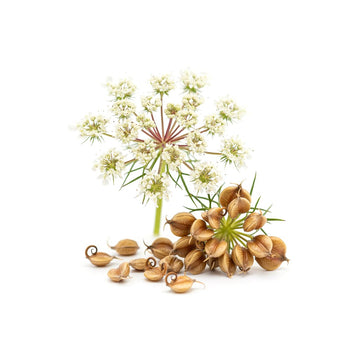
Carrot seed oil is an antioxidant-rich botanical traditionally used to revive and brighten dull, mature skin. Restorative, it suits aging or weathered skin.
A natural history
Carrot seed oil is drawn not from the familiar orange root but from the seeds of wild carrot, the airy white wildflower known by the lovely name Queen Anne's lace. Look closely at its flat lace cap of tiny white blooms and you will often find a single deep crimson floret at the very center. Legend says it is a drop of blood from Queen Anne's finger, pricked as she sat making lace.
The wild carrot has been a cherished herbal plant for centuries, carried across oceans by settlers to grow in kitchen gardens. Its seeds hold a fragrant oil rich in the same family of golden antioxidants, the carotenoids, that color carrots, prized in natural skin care for the glow and vitality they lend to tired, mature looking skin.
What it does for your skin
Carrot seed oil is rich in antioxidant carotenoids and vitamin E, the compounds behind its reputation for radiance. In a laboratory study, cosmetic creams made with carrot seed oil showed real antioxidant, free radical scavenging activity, which the researchers tied to a refreshed, rejuvenated look.[1] Analysis confirms the cold pressed oil is rich in skin loving unsaturated fats and vitamin E.[2] In a formula it is an antioxidant oil that helps dull, tired skin look revived and glowing. Its skin research is still early.
References
[1] Singh S, et al. Formulation and evaluation of carrot seed oil-based cosmetic emulsions. J Cosmet Laser Ther. 2018;21(2):99-107. doi:10.1080/14764172.2018.1469769
[2] Rigano F, et al. Determination of main lipids and volatile compounds in unconventional cold-pressed seed oils through chromatographic techniques. J Food Sci. 2025;90(1):e17661. doi:10.1111/1750-3841.17661
Found in these formulas
Questions, answered
It is rich in antioxidant carotenoids and vitamin E, used to help dull, tired, mature-looking skin appear revived and radiant.
No. It is pressed from the seeds of wild carrot, Queen Anne's lace, and carries the plant's aromatic antioxidant oil rather than the root.