

Ingredient Library
Cajuput
Melaleuca cajuputi
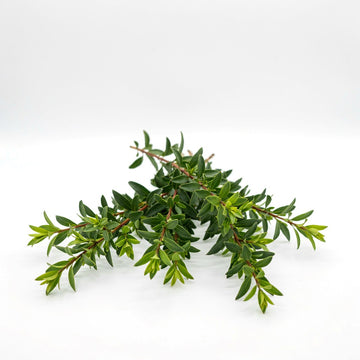
Cajuput is a brisk tea-tree relative with naturally clarifying, refreshing properties. Used sparingly, it suits oily skin and balm formulas.


A natural history
Cajuput is the fresh, clarifying oil of a tree native to Southeast Asia and Australia, a close botanical cousin of tea tree. Its name comes from the Malay kayu putih, meaning white wood, a nod to the tree's pale, papery bark, and its leaves have long been distilled into a crisp, cooling oil treasured across the islands.
Known across Southeast Asia as minyak kayu putih, white wood oil, cajuput has been a household remedy for generations, reached for as a warming, clarifying comfort. Rich in the same fresh compound found in eucalyptus, it carries a bright, purifying character that translates naturally into clarifying skin care.
What it does for your skin
Cajuput is a clarifying, cineole rich leaf oil. In laboratory study, cajuput oil was found rich in cineole, the fresh compound behind its crisp, clarifying scent.[1] In further testing, the oil showed antioxidant and protective activity.[2] In a formula, used in gentle measure, cajuput lends a clarifying, purifying, refreshing touch to oily or congested looking skin. That clarifying, refreshing character is documented in laboratory antioxidant studies of its cineole.
References
[1] Septiana S, et al. Metabolomics approach for determining potential metabolites correlated with sensory attributes of Melaleuca cajuputi essential oil, a promising flavor ingredient. J Biosci Bioeng. 2020;129(5):581-587. doi:10.1016/j.jbiosc.2019.12.005
[2] Chaudhari AK, et al. Green facile synthesis of cajuput (Melaleuca cajuputi Powell.) essential oil loaded chitosan film and evaluation of its effectiveness on shelf-life extension of white button mushroom. Food Chem. 2023;401:134114. doi:10.1016/j.foodchem.2022.134114
Questions, answered
It is a fresh, clarifying leaf oil, a cousin of tea tree, used in gentle measure to purify and refresh oily or congested-looking skin.
It comes from the Malay kayu putih, meaning white wood, for the tree's pale, papery bark.