

Ingredient Library
Black Seed Oil
Nigella sativa
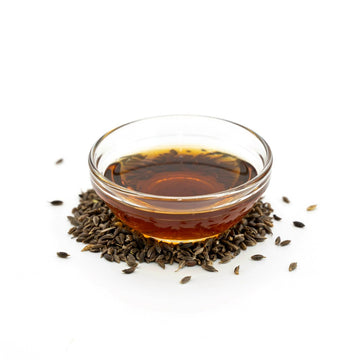
Black seed oil, from Nigella sativa, is an antioxidant-rich oil traditionally used to calm and balance. It comforts blemish-prone and reactive skin, and suits combination skin.
A natural history
The black seed plant scatters its tiny, coal black seeds across a band of the world that runs from the eastern Mediterranean through the Middle East and into South Asia. People have pressed, chewed, and steeped those seeds for thousands of years, and caravans carried them along the spice routes until they reached nearly every classical medicine chest from Cairo to the Indian subcontinent. Traders knew the seed by an affectionate name, the blessed seed, and it became one of the most quietly revered botanicals of the old world.
Its reputation rests on one of the most repeated lines in the history of herbal medicine. The scholar al-Bukhari recorded a saying that the black seed was a remedy for every ailment but death itself, and that single phrase carried it into kitchens and apothecaries across three continents. People stirred the seeds into honey, sprinkled them over warm bread, and worked the pressed oil into rough, chapped skin. Even now a jar of the oil is a household staple across much of the world.
What it does for your skin
Modern interest centers on thymoquinone, the antioxidant compound that gives the oil its character. In a randomized, double blind trial, a topical black seed preparation used twice a day was associated with improvements in the comfort and look of irritated, dry hand skin that were comparable to a standard reference cream over four weeks.[1] Reviews of the seed's skin research credit that same thymoquinone for the antioxidant and soothing qualities behind its long traditional use.[2] In a finished formula it lends a cushioning, antioxidant rich note that helps skin look calm and feel less reactive.
References
[1] Yousefi M, et al. Comparison of therapeutic effect of topical Nigella with Betamethasone and Eucerin in hand eczema. J Eur Acad Dermatol Venereol. 2013;27(12):1498-1504. doi:10.1111/jdv.12033
[2] Sallehuddin N, et al. Nigella sativa and its active compound, thymoquinone, accelerate wound healing in an in vivo animal model. Int J Environ Res Public Health. 2020;17(11):4160. doi:10.3390/ijerph17114160
Found in these formulas
Questions, answered
It is best known for helping stressed, dry-feeling skin look calmer. As with any facial oil, patch test first if your skin runs reactive.
It is the main antioxidant compound in black seed oil and the focus of most of its skin research.