

Ingredient Library
Beeswax
Cera alba
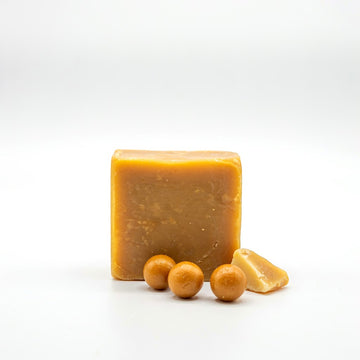
Beeswax is a natural wax that seals in moisture and gives balms their protective, cushioning texture. Barrier-building, it suits dry, exposed, or chapped skin.
A natural history
Beeswax is one of the oldest materials people have ever put to work. Secreted by honeybees to build their comb, it has been gathered for thousands of years for balms, candles, sealing, and art. The ancient Egyptians used it in cosmetics and in mummification, sealing and protecting against moisture, and Greek and Roman painters bound their pigments in molten beeswax to make portraits that still glow with color today.
It even gave us the first face cream. In the second century the physician Galen blended beeswax with olive oil and water to make a cooling salve remembered as cold cream, the direct ancestor of the modern moisturizer, a formula so sound it lasted in some form for more than a thousand years. Those beeswax painted Egyptian mummy portraits, meanwhile, have kept their brilliant color for roughly two thousand years.
What it does for your skin
Beeswax earns its place as a protective emollient and occlusive, forming a soft, breathable layer that helps skin hold on to moisture. A review of beeswax in skincare describes it helping support the skin barrier by slowing water loss while softening the feel of skin.[1] In one study, a beeswax based formula was linked to reduced water loss and higher moisture in the skin over four weeks.[2] In a formula it gives balms and creams their cushioning structure and a protective, comforting finish.
References
[1] Nong Y, et al. A review of the use of beeswax in skincare. J Cosmet Dermatol. 2023;22(8):2166-2173. doi:10.1111/jocd.15718
[2] Souza C, et al. Topical formulation containing beeswax-based nanoparticles improved in vivo skin barrier function. AAPS PharmSciTech. 2017;18(7):2505-2516. doi:10.1208/s12249-017-0737-x
Found in these formulas
Questions, answered
It is a natural protective emollient that forms a soft, breathable layer to help skin hold moisture, and it gives balms their structure.
Used at normal levels it is generally well tolerated and breathable, valued for protecting dry, chapped, or exposed skin.