

Ingredient Library
Bakuchiol
Psoralea corylifolia
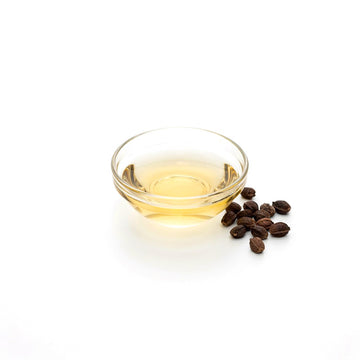
Bakuchiol (pronounced buh-KOO-chee-all) is a plant-derived retinol alternative from Babchi seeds. It smooths fine lines and evens tone the way retinol does, without the irritation, which makes it the gentle heart of a slow-aging night routine.
A natural history
The babchi plant has been used in India and across South and Southeast Asia for many centuries, above all for the skin. Its seeds were a classic remedy for the pale patches of vitiligo: a paste was applied and the skin exposed to sunlight, a practice that, remarkably, foreshadowed modern light-based skin therapy by hundreds of years. The plant's very names in old texts point to this gift, describing it as the seed that brings color and luster back to the skin.
What today's skincare uses is not the whole seed but bakuchiol, a single compound carefully isolated from it. That distinction matters: the raw seed carries other substances that make skin sensitive to light, while purified bakuchiol does not, which is what lets it stand in for retinol so gently. For that reason we use the refined compound, never the raw seed.
What it does for your skin
Bakuchiol is best known as a gentler stand-in for retinol. In a 2019 randomized, double-blind study in the British Journal of Dermatology, a bakuchiol cream improved the look of wrinkles and pigmentation about as well as retinol over twelve weeks, while the retinol users reported more stinging and flaking.[1] Earlier work in the International Journal of Cosmetic Science found that, although bakuchiol looks nothing like a retinoid, it switches on a similar pattern of skin-renewal activity, with a facial study reporting smoother, firmer, more even-looking skin and none of the usual retinol irritation.[2]
Bakuchiol vs retinol, honestly
The fair way to put it: retinol has decades of data behind it, and bakuchiol is the young challenger that has matched it stride for stride in head-to-head testing, with a far gentler ride. In the trial above, the two improved wrinkles and pigmentation to a similar degree over twelve weeks; the difference showed up in the side effects, where the retinol users reported more stinging and flaking.[1]
For the full comparison, read our guide: Bakuchiol vs Retinol: What the Science Says.
| Bakuchiol | Retinol | |
|---|---|---|
| What it is | A plant compound from Babchi seeds | A vitamin A derivative |
| Smoothing and tone | Comparable improvement in head-to-head testing | Comparable improvement |
| Irritation | Low; suits sensitive skin | Stinging, flaking, and dryness are common, especially early |
| Sun sensitivity | Does not increase it | Increases it; daily SPF becomes non-negotiable |
| During pregnancy | The common swap, since it is not a retinoid; confirm with your doctor | Retinoids are commonly avoided |
| Track record | Strong but younger evidence, led by a randomized head-to-head trial | Decades of clinical data |
Both paths lead to renewal. Bakuchiol is simply the one your skin does not have to endure to enjoy, which is why it anchors our overnight treatment step.
How to use bakuchiol
Bakuchiol works best as a nightly habit, and unlike retinol there is no ramp-up period to negotiate: you simply start. Cleanse, apply any water-based serums first, then finish with a bakuchiol treatment as the last step. In our line that is the 2% Bakuchiol Serum-in-Oil with CoQ10 and Black Seed, smoothed over face and neck before bed. Give it a full skin cycle: the published results are measured at eight to twelve weeks of steady nightly use.
References
[1] Dhaliwal S, Rybak I, Ellis SR, et al. Prospective, randomized, double-blind assessment of topical bakuchiol and retinol for facial photoageing. Br J Dermatol. 2019;180(2):289-296. doi.org/10.1111/bjd.16918
[2] Chaudhuri RK, Bojanowski K. Bakuchiol: a retinol-like functional compound revealed by gene expression profiling and clinically proven to have anti-aging effects. Int J Cosmet Sci. 2014;36(3):221-230. doi.org/10.1111/ics.12117
Found in these formulas
Questions, answered
It is the closest natural alternative. In a head-to-head study it improved the look of wrinkles and pigmentation about as well as retinol, with less irritation.
For most people, yes. It is not a retinoid and tends to cause less stinging, flaking, and dryness, which is why it suits sensitive and retinol-shy skin.
Bakuchiol is not a retinoid, which is why so many people make it their retinol swap during pregnancy and nursing. As with any skincare during pregnancy, show the ingredient list to your doctor and let them make the call.
A purge is not expected. Bakuchiol speeds skin renewal more gently than retinoids do, so most skin skips the angry adjustment phase entirely and simply looks gradually fresher.
It suits blemish-prone skin well. It refines texture and tone without the dryness that often aggravates breakouts, and our formula pairs it with calming black seed and calendula.
Yes, they layer well together, and many routines pair them deliberately since bakuchiol can steady skin through a retinol routine. Water-based products first, oils last.
No. The purified compound we use does not carry the light-sensitizing substances found in the raw seed.
Our 2% Bakuchiol with CoQ10 and Black Seed Overnight Oil.